The useful part first
Key takeaways
- Main sewer rodding is meant for a blocked or restricted building sewer, not for a single clogged sink or toilet by itself.
- A contractor may ask about symptoms, the last time the line was cleaned, and whether any cleanout access is already visible.
- If the line keeps backing up after cleaning, save the dates, the affected fixtures, and any photos so a repeat call can be compared with the earlier one.
- If the problem looks shared or uncertain, a camera inspection can help decide whether the line is just obstructed or whether something structural needs a different plan.
A main line backup is different from a slow kitchen sink or tub drain. When wastewater is coming back up, pause water use and do not run fixtures to recreate the problem. That keeps more water from entering a line that already has nowhere to go.
For Gurnee properties, the village notes that residents with basement sewage backups should contact Public Works before a plumber so the public sewer can be checked. The same village guidance also places the private building sewer, from the village main connection to the building, on the property owner side. If the issue sits on the private line, a contractor can help with rodding and next steps.
What sewer rodding is meant to clear
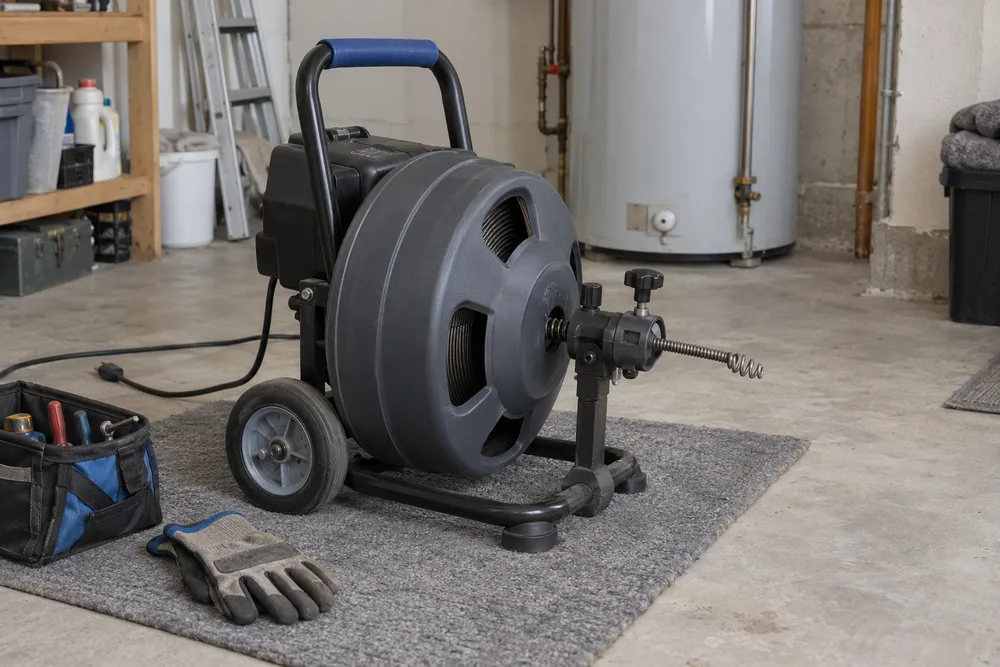
Sewer rodding uses a mechanical cable and cutting head to break through common obstructions in the main sewer line. It is typically used for wipes, paper buildup, soft debris, and some root intrusion that is blocking flow. The goal is to restore passage through the pipe, not to guess at every possible cause before the line is opened up.
That makes it a practical first step when multiple fixtures are affected or when waste is slow to leave the house. It is not the same as cleaning a single branch drain, and it is not a cure for a damaged pipe wall, a separated joint, or a line that has settled out of grade. If the line clears and then backs up again soon after, that pattern points to more than a one-time clog and is worth documenting.
- Good fit: repeated main line backups, several slow fixtures, or a line that has not been cleaned in a long time.
- Less useful: one isolated sink, tub, or toilet clog that stays limited to one fixture.
- Possible follow-up: a camera inspection when the obstruction returns or the cause is unclear.
What the contractor will usually ask first
Expect questions about which fixtures are affected, whether water is coming up in a floor drain, and whether the sewer smell or backup gets worse when laundry or toilets are used. The contractor may also ask whether you have a cleanout cap visible in the basement, yard, or utility area. Those details help decide whether rodding alone is enough or whether an inspection should follow.
A concise checklist before you call
A few observations make the conversation more efficient and help the contractor prepare the right equipment. Keep the notes short and concrete. Do not keep testing fixtures if wastewater is already backing up.
Use this checklist:
- Which fixture first showed the problem, and which other fixtures are now slow or backing up.
- Whether the backup is steady, intermittent, or tied to a specific action like flushing or laundry discharge.
- Whether you can see a cleanout and whether it is dry, damp, or already affected by backup.
- Any recent work, heavy root activity in the yard, or a prior cleaning that did not last.
- Whether the issue started after a storm, a long vacation, or a change in how the house has been used.
Why this matters in practice
A line that only acts up during heavy use can be different from one that backs up after a short period of normal use. If the same symptoms happen every few months, the contractor will want to know that too. Repeat patterns are often more useful than a single dramatic moment.
Water backing up now?
Pause water use and call. Emergency calls are accepted 24/7.
How Gurnee’s sewer responsibility note affects the call
Gurnee’s public guidance separates the village main from the private building sewer. That matters because a basement backup can originate on either side. The village says residents with basement sewage backups should contact Public Works before a plumber so the public sewer can be checked. If the public line is not the source, the private side becomes the more likely place for rodding, inspection, or another corrective step.
That does not mean every backup has the same cause, and it does not mean the answer is always mechanical cleaning. It does mean the first conversation should focus on where the backup appears, how many fixtures are involved, and whether the issue seems isolated to the house or shared beyond it. A clear symptom description helps separate a private-line service call from a public-side concern.
If you want to compare service types before booking, the referral process explains how a request is routed, while the emergency service page is the place for an active backup that needs urgent intake.
- Village guidance references basement sewage backups and public sewer checks.
- Private building sewer responsibility runs from the village main connection to the building.
- A contractor can still help once the issue appears to be on the private side.
What not to assume from the location of the backup
A basement floor drain, laundry standpipe, toilet, or shower can be the first place sewage shows up even when the restriction is farther out in the line. The symptom location is useful, but it is not the same as the exact clog point. That is why the conversation often moves from cleaning to inspection if the line does not stay clear.
What the service visit usually covers
A main-line rodding visit usually starts with locating access, confirming the symptoms, and choosing the best way into the line. If a cleanout is available, that often makes the work more direct. If it is not, the contractor may need to work from another suitable access point. The first practical goal is to reach the blocked section safely and get the line moving again.
After the line is opened, the contractor may test flow to see whether water now moves normally through the system. If the backup returns quickly, or if the cable brings back heavy root material or damaged debris, a camera inspection can be the next reasonable step. You can review that option on the inspection page or read the fuller camera inspection guide if you want to understand what can and cannot be seen.
If the blockage appears to be grease-heavy, root-related, or recurring, the contractor may talk through whether a different cleaning method or a follow-up inspection would make more sense than a simple repeat pass. The work should answer the immediate blockage first, then the next question if the line keeps acting up.
- Access point and symptom location are checked before cleaning begins.
- Flow is usually tested again after the line is opened.
- A repeat blockage often leads to inspection or a different cleaning method.
When a camera becomes more useful
A camera is most useful after the line has been opened enough to let the lens pass and show the pipe condition. It can help distinguish a soft obstruction from a pipe that has cracked, shifted, or collected buildup in a way that plain rodding will not fix. If you are comparing method choices, the rodding guide and inspection timing guide explain that sequence in more depth.
A clearly hypothetical repeat-problem example
For example, suppose a home in Gurnee has a basement floor drain that backs up every few months, but only after a full load of laundry and a few toilet flushes. The first cleaning clears the line, yet the same issue returns after several weeks. In that situation, the useful records are simple: the date of each backup, which fixtures were used beforehand, whether the floor drain or another fixture showed water first, and whether a cleanout was visible when the contractor arrived.
Those notes help the next contractor compare patterns instead of starting from scratch. Keep any photos of the backup point, the cleaned access area, and the condition of the drain cover or cleanout cap. If the line was scoped later, save the inspection notes too. A short record of repeat symptoms often tells more than memory alone.
If the clog comes back after clearing, that does not automatically mean the same service should be repeated in the same way. It may still be another blockage, but it could also be a root issue, an offset joint, or buildup that needs a different cleaning approach. That is when the conversation shifts from simple clearing to a broader line assessment.
- Write down dates and the fixtures used before each backup.
- Save photos of the affected area and any visible access point.
- Keep inspection notes if the line is scoped later.
How to keep the record useful
Keep it factual and short. Note what you saw, not what you think caused it. A clean record makes it easier to compare one event with the next and helps avoid repeating the same question every time the line acts up.
How to decide between rodding, inspection, or another service
Main sewer rodding is a good fit when the line is blocked and the likely answer is mechanical removal. Inspection is useful when the blockage returns, when there is a question about the pipe condition, or when the cleanup only gives temporary relief. Hydro jetting may suit lines with heavier buildup or grease, but it is a separate method and should be chosen based on the pipe’s condition and access, not as a default. Different symptoms point to different next steps.
If the issue is clearly a fixture drain, a dedicated sink, toilet, tub, or floor-drain service is usually more appropriate than main-line work. If you are not sure which problem you have, the comparison on single fixture or main sewer is a useful way to sort the symptoms before you book. The maintenance guide also helps if you are trying to plan care after the line has been cleared.
The useful question is not whether the line can be cleaned at all, but whether the line is likely to stay open after the work is done. That depends on what was removed, how the pipe reacts during flow testing, and whether the same symptoms have already returned before.
- Rodding clears many blockages quickly enough to restore use.
- Inspection helps when the cause or pipe condition still matters after cleaning.
- Jetting may be better for certain buildup patterns, depending on the pipe and access.
When to stop and make the call again
If wastewater is still coming up after the first round of cleaning, or if several fixtures are still affected, do not keep running water to see whether it clears on its own. That can worsen the backup and make the cleanup larger than it needed to be. At that point, the useful next step is a follow-up conversation about access, line condition, and whether another tool is warranted.
Main sewer rodding vs. other common service choices
| Situation | Most likely fit | Why it fits | What may come next |
|---|---|---|---|
| Several fixtures back up or drain slowly | Main sewer rodding | Points to a shared line restriction | Inspection if the problem returns |
| One sink, tub, or toilet is affected | Fixture-specific drain cleaning | The issue appears limited to one branch drain | Main line work only if symptoms spread |
| Line clears, then clogs again soon | Rodding plus inspection | Recurrence can signal roots, buildup, or pipe condition | Camera inspection or a different cleaning method |
| Heavy buildup is suspected but the line is accessible | Hydro jetting | Can clean residue that a cable may not remove fully | Inspection if the pipe condition is uncertain |
Questions homeowners ask
Should I keep flushing if the sewer seems backed up?
No. If wastewater is coming back up, pause water use and do not run fixtures to recreate the problem. More water only adds to the backup.
Do I need a cleanout before sewer rodding can happen?
Not always, but a visible cleanout can make access easier. If you know where one is, mention it when you call. Never open a pressurized or backed-up cleanout on your own.
How do I know whether the problem is in the private line or the public sewer?
Start with the symptoms and the location of the backup. In Gurnee, the village says residents with basement sewage backups should contact Public Works before a plumber so the public sewer can be checked.
What records should I keep if the clog keeps coming back?
Keep the dates, affected fixtures, what was running before the backup, whether the problem returned after cleaning, and any camera notes or photos. Those details help compare one event with the next.
Is sewer rodding always enough?
No. It clears many blockages, but it will not repair a cracked, shifted, or otherwise damaged pipe. If the same issue returns, inspection is usually the next useful conversation.
Local resources
Use these official resources for municipal or utility information. They are separate from Plumbers 911.